A countertop reset works best when it creates a clear place to prepare food, wash up and return everyday items. Begin by moving things, not by adding shelves. You can decide whether an organiser is useful after a few normal cooking sessions.
Step 1: clear one working section
Choose the section you use for chopping or serving. Move its contents temporarily to a table and clean the surface. Keep the trial manageable rather than emptying the entire kitchen at once. Notice which objects have accumulated without a regular job there.
Step 2: sort by frequency
Separate objects you use every day from those you reach for occasionally. Daily does not automatically mean countertop storage, but it gives you a useful shortlist. Put occasional equipment in accessible cupboard space if its instructions and handling needs allow that.
Keep a small return basket for things that belong elsewhere. A countertop can become a landing place for keys, paperwork and unopened parcels; those need their own destination, not a kitchen rack.
Step 3: define the routine
Leave a usable preparation area, a washing area and a position for frequently used tools. Keep storage away from places where it obstructs appliance ventilation, splashes or heat clearances. Follow each appliance's instructions rather than inventing a standard gap for every model.
Step 4: contain one small group
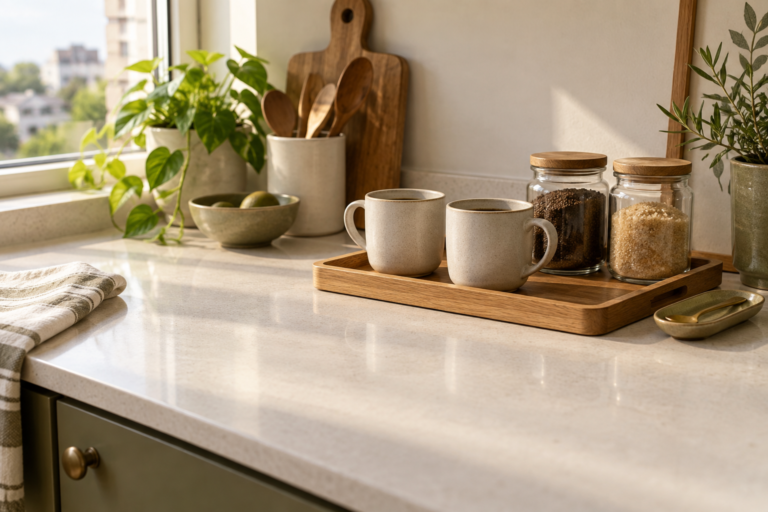
Try a tray for a few frequently used items or a stable holder for appropriate utensils. The group should be easy to lift so you can wipe underneath it. Avoid a tray so large that it takes over the space you just cleared.
If considering a shelf, check both its footprint and the height of the items underneath. A second level is useful only when both levels remain easy to access and clean.
Step 5: review after real use
Ask whether you can prepare a normal meal without moving the new arrangement. Remove anything that repeatedly gets in the way. Buy an organiser only for a persistent, measured problem; a successful reset may require no new product at all.
A useful question before you decide
What should stay on the counter?
Keep the items that support the daily routine and still leave room to prepare food. Trial the arrangement during normal cooking; anything repeatedly moved out of the way needs a different position.
Continue planning
Editorial note: this guide distinguishes general planning advice from recorded product-listing information. No hands-on product testing is claimed. Read our editorial policy for our approach.