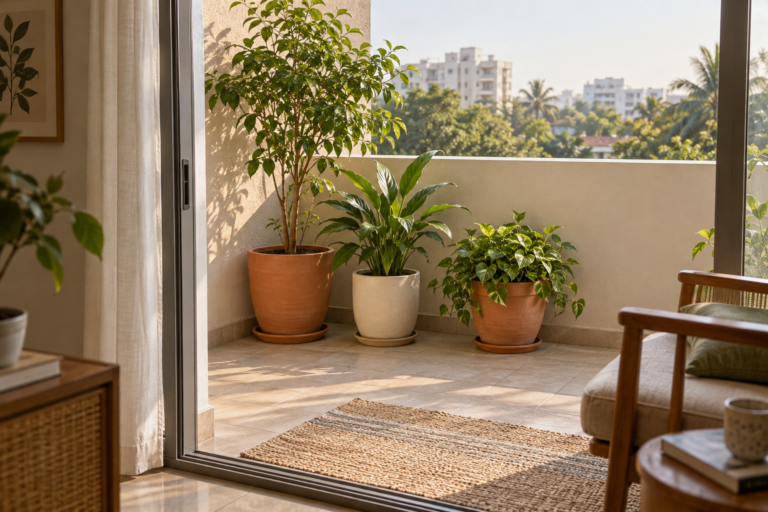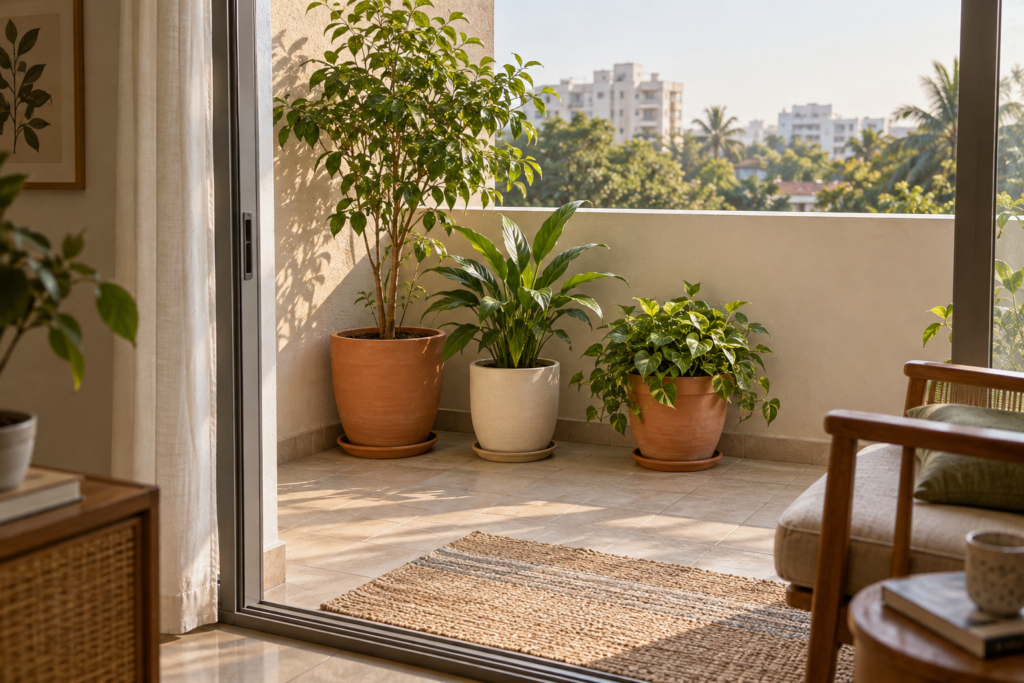
Choose an indoor plant pot by checking its drainage arrangement, the plant's needs and the surface where it will stand. A tray in the photograph does not confirm that the pot has drainage holes or that the selected pack includes a tray for every pot.
Identify the complete arrangement
Decide whether the plant will grow directly in the pot or remain in an inner nursery pot inside a decorative outer container. Those are different arrangements and require different measurements. For an inner pot, compare its full height and widest diameter with the opening of the outer container.
The Royal Horticultural Society's container guidance emphasises drainage and keeping drainage holes clear. Use plant-specific care advice for watering; a matching tray is not a universal watering system.
Inspect the listing details
- Look for explicit information about drainage holes and any removable plugs.
- Confirm the pot quantity and tray quantity separately.
- Check whether dimensions are internal, external or measured at the rim.
- Compare the widest part with the available shelf or floor area.
- Verify the material and stated intended use.
Use this checklist to compare the exact pot and tray you are considering. It does not endorse a particular pack or assume that a product photograph establishes drainage performance.
Plan the watering access
You should be able to inspect the arrangement and manage drainage without lifting an awkward filled container over other objects. Check how the tray is removed and where you will place the pot during care. Do not hide essential access behind a decorative grouping.
Consider the surface beneath it and the suitability of that location. Do not assume a decorative container or tray will protect furniture from every spill or leak.
Buy for the plant, then the room
Choose dimensions appropriate to the plant using reliable plant-care guidance, then compare colours and shapes. A pot that matches the room but does not suit the plant or care routine is unlikely to be useful.
Start with one arrangement and test access before buying a large matching set. Keep the product count tied to the plants and locations you actually have.
Further reading: RHS guidance on growing plants in containers.
A useful question before you decide
Does an included tray prove that the pot has drainage holes?
No. Confirm the holes, plugs and intended arrangement explicitly. A styled photograph or a tray in the pack does not establish how excess water leaves the planted container.
Continue planning
Editorial note: this guide distinguishes general planning advice from recorded product-listing information. No hands-on product testing is claimed. Read our editorial policy for our approach.