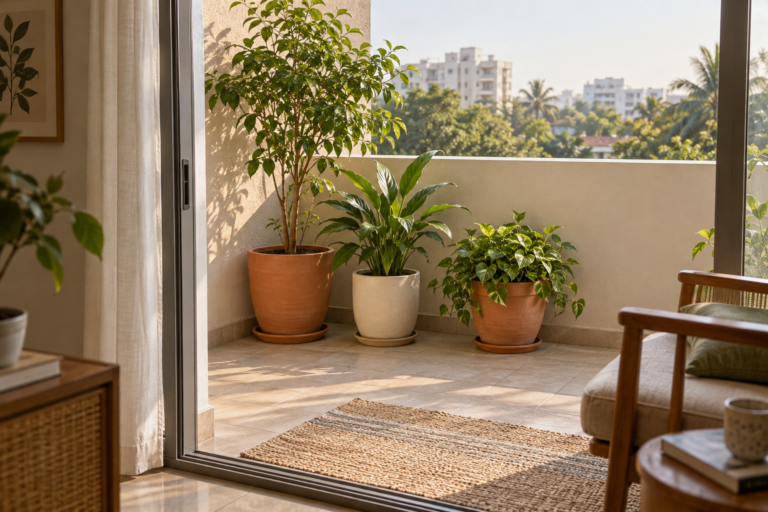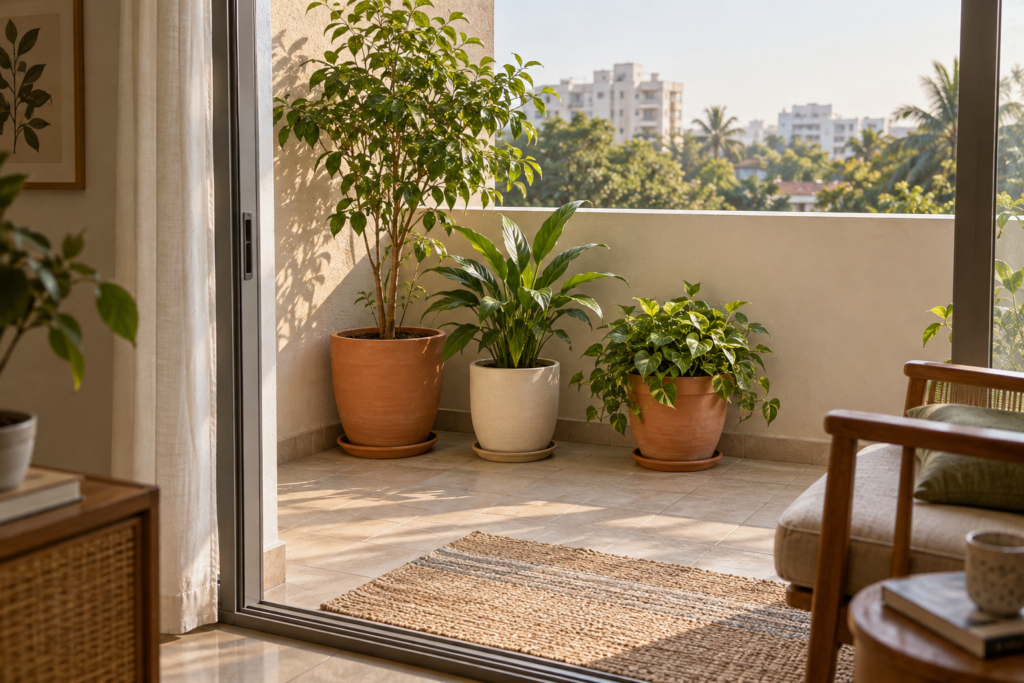
Measure a balcony for movement first and planters second. Record the doors, walking route and fixed obstacles before choosing pot sizes. A layout is useful only if you can reach the plants and continue using the balcony comfortably.
Draw the usable floor
Make a simple sketch showing the door swing, furniture, drains and any equipment that needs access. Include narrow corners and projections rather than treating the space as a perfect rectangle. Measure where the pot would actually stand.
Mark the regular route through the balcony. Avoid selecting a pot that fits only by reducing that route to an awkward squeeze. Leave access to features that need cleaning, inspection or maintenance.
Measure the complete planter
Use the widest external dimension, including the tray or stand. The base width alone can underestimate how much room a tapered pot occupies. Add the plant's likely spread based on reliable guidance for that plant.
If using an inner pot inside a cover, compare both dimensions. A pot may fit through the opening but sit at an inconvenient height, making watering or removal difficult.
Trial the positions
- Use paper outlines to represent footprints.
- Open the door and use any furniture normally.
- Check the route for watering and cleaning.
- Consider where drained water would go.
- Remove any position that creates obstruction or awkward reaching.
For large or heavy arrangements, do not assume the balcony's load capacity from appearance. Seek appropriate building-specific guidance where needed. This article does not calculate structural limits or approve placing planters on a railing.
Purchase in stages
Start with one or two measured locations instead of buying a large set. A multipack is worthwhile only when every pot has an appropriate position and purpose. Empty pots waiting for a location can become the clutter the project was meant to avoid.
Use plant-specific advice to match the location's conditions with a suitable plant. Dimensions solve the space problem; they do not establish whether the light, exposure or care routine will suit the plant.
A useful question before you decide
Which pot measurement should I use for the layout?
Use the widest external outline, including the tray or stand, rather than the base alone. Separately account for the plant’s eventual spread using guidance for that plant.
Continue planning
Editorial note: this guide distinguishes general planning advice from recorded product-listing information. No hands-on product testing is claimed. Read our editorial policy for our approach.