As an Amazon Associate I earn from qualifying purchases. Qualifying purchases through the links below may earn us a commission at no extra cost to you.
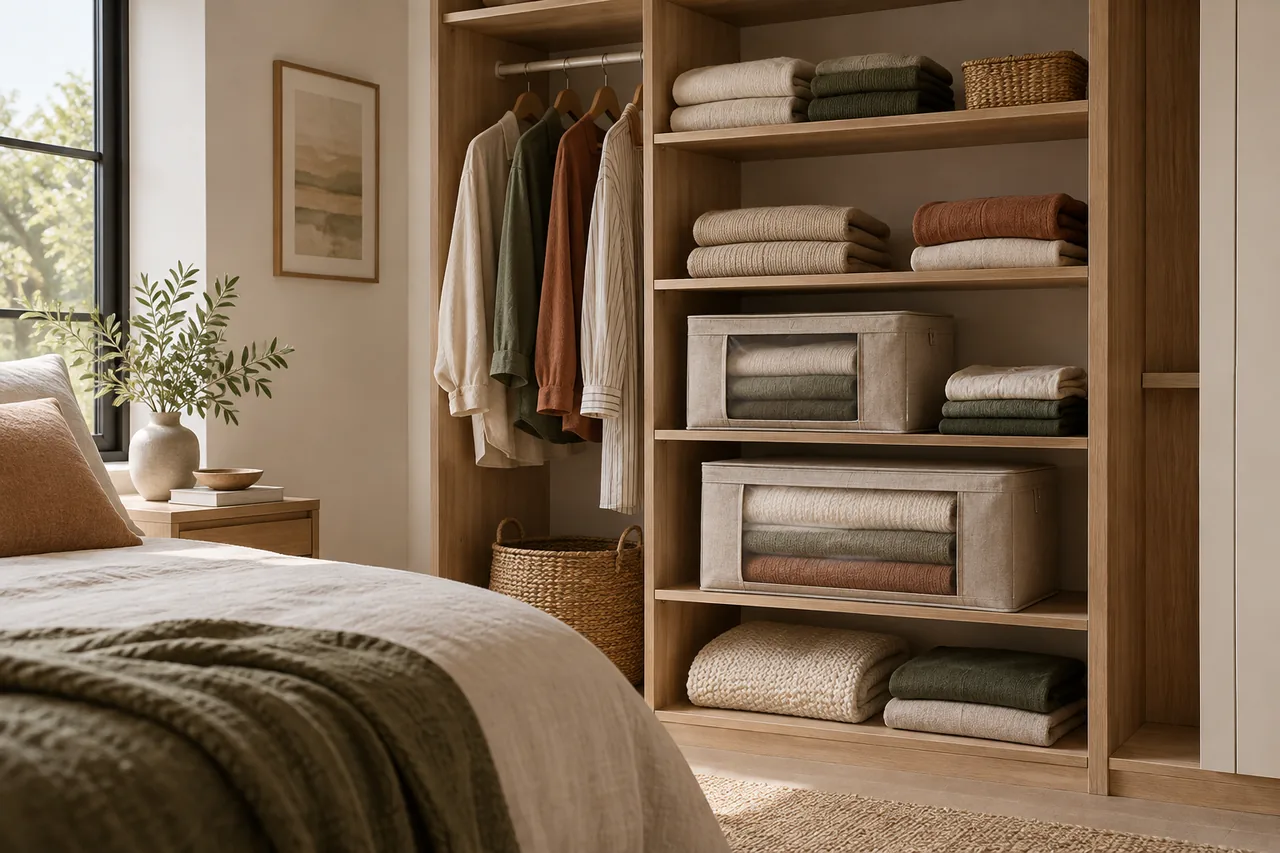
Choose saree storage covers around the folded garments and the shelf opening. A cover should contain a manageable group without needing to be forced closed. It is an organisation aid; it should not be treated as a guarantee against moisture, insects or fabric damage.
Measure the filled bundle first
Fold the sarees as you normally store them, then measure the length, width and height of a realistic stack. Include the space taken by any separate blouse pieces or accessories that will be kept with that group. Avoid planning around an empty cover alone.
Measure the shelf depth and clear opening, including hinges and door tracks. Leave room to grip the cover and lift it out without rubbing it against the shelf above. A flexible cover may bulge when filled, so do not assume its empty dimensions describe the final shape.
What to inspect before ordering
| Feature | Question to ask |
|---|---|
| Size | Will the intended folded stack fit without compression? |
| Opening | Can you remove one garment without disturbing the whole group? |
| Visibility | Can a label or viewing panel help identify the contents? |
| Handling | Can you support the filled cover from below? |
| Material and care | Are the cover’s cleaning and storage instructions clear? |
| Pack quantity | Do you have a useful purpose and shelf space for every cover? |
On a small screen, scroll the table sideways to see every column.
A product example to inspect
The HomeStrap six-cover pack is one example to compare with your measurements. Our listing research found dimensions around 45 × 33 × 22 cm, with some inconsistent width wording. Verify the current selected pack and exact dimensions before ordering; do not use those approximate figures for a tight-fitting shelf.
Group for access, not just colour
Separate regular wear from occasional outfits. A cover holding one manageable occasion group can be easier to retrieve than a large stack mixing everyday clothing with rarely used pieces. Add a short outward-facing label such as “daily cottons” or “wedding outfits” if that matches your wardrobe.
Keep a simple note of which accessories belong with an outfit, rather than placing small loose pieces where they may catch on the fabric. Follow the garment’s care instructions for folding and any protective wrapping; delicate or embellished garments may need different handling from everyday items.
Before the cover goes back on the shelf
- Check that the garments are ready for storage according to their care instructions.
- Inspect the cupboard for dampness or visible problems instead of trying to solve them with a cover.
- Close the cover without pressing down hard on the stack.
- Support the base when lifting; do not assume handles are rated for a heavy load.
- Keep frequently used groups within comfortable reach.
When existing storage is enough
If the shelf is already clean, accessible and sensibly grouped, labels or a smaller stack may be all you need. Buy covers when they make retrieval and grouping easier, not simply to hide an overfilled wardrobe. They also should not replace fabric-specific care advice for valuable garments.
How many sarees fit in one cover?
There is no reliable universal count. Thickness, embellishment and folding method change the space needed. Measure your own intended bundle instead of relying on a generic capacity claim.
Can a cover fix a damp cupboard?
No. Investigate and address the cupboard conditions first. Do not infer moisture protection from a storage-cover photograph or from the fact that it has a zip.
About this guide
This is a specification-based buying guide, not a hands-on product test. Product examples are based on listing research recorded on 20 September 2026. Check the selected variant, dimensions and current care instructions on the linked page before buying.
For more planning help, see our small-space organisation guide and storage selection guide.