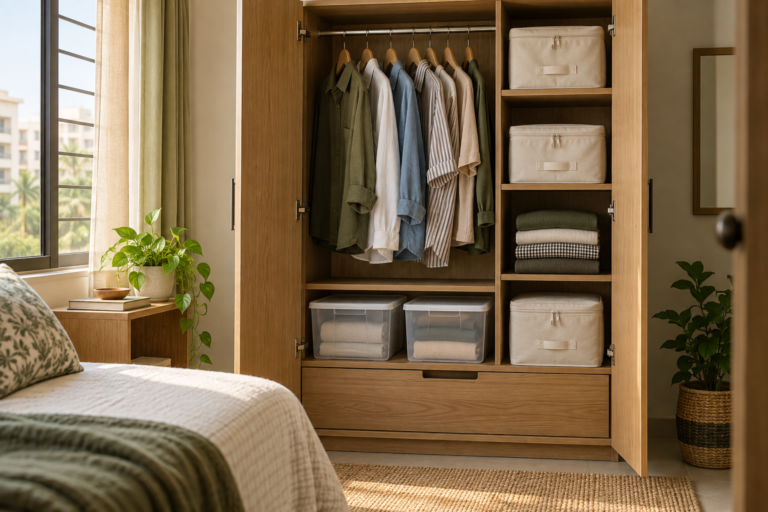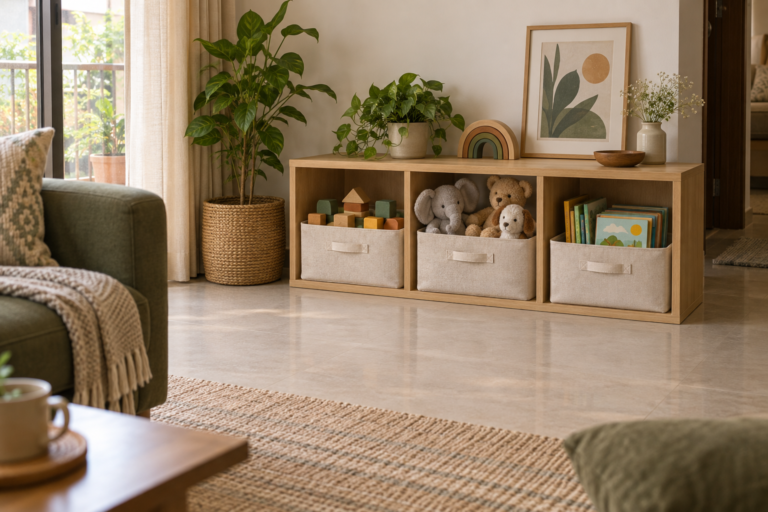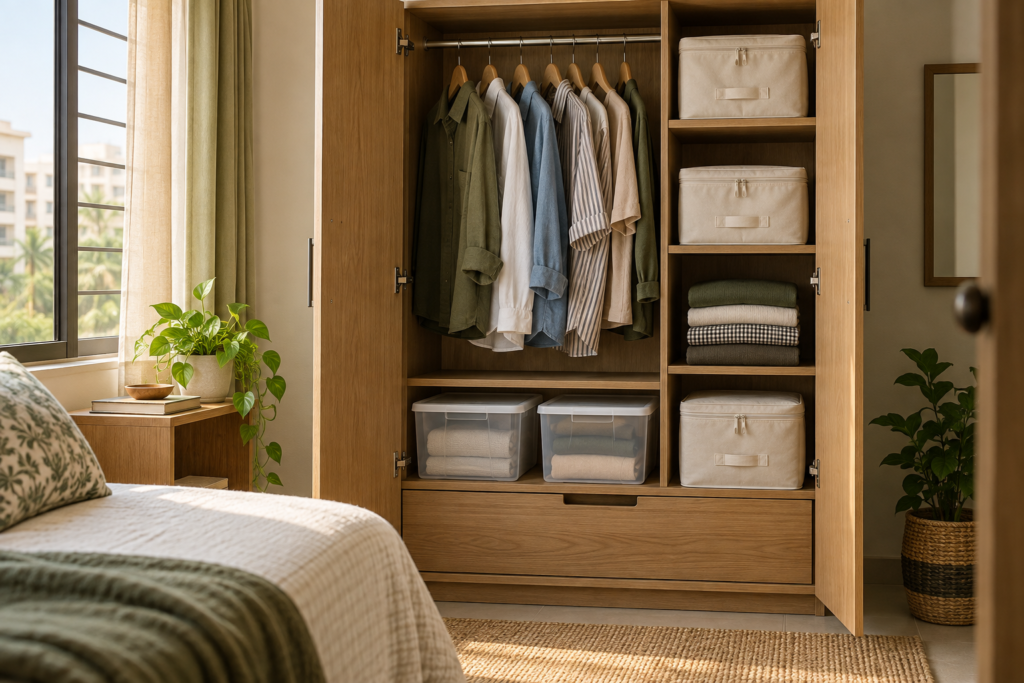
Plan seasonal clothing storage around retrieval dates, garment care and available space. Put together a manageable group for the season you are storing, then choose containers that fit that group and the cupboard. Do not buy a stack of boxes before sorting the clothing.
Decide what belongs in the group
Separate clothing you expect to use next season from items that need repair or a separate decision. Keeping everything together can make the next changeover harder. Follow garment-specific cleaning and storage guidance before packing.
Avoid assuming that every fabric should be compressed, folded or hung in the same way. Embellished, delicate or valuable garments may need different care from everyday items. A general storage container does not override that requirement.
Measure the filled bundle
Fold or arrange a realistic group and measure it without forcing it into a smaller shape. Add space to access the opening and lift the container from its shelf. Check whether a flexible cover bulges beyond the quoted dimensions when filled.
For rigid boxes, measure handles, wheels and lids rather than relying on the capacity alone. A box that fits the shelf but cannot be opened or removed comfortably is not a useful fit.
Make the next changeover easier
- Label the season and broad contents on the outward-facing side.
- Keep related accessories identifiable without loose pieces catching on fabric.
- Put the group where retrieval will not require moving heavy unrelated items.
- Keep a brief inventory if several containers look similar.
- Leave access for checking the storage conditions and routine cleaning.
Choose the environment before the container
Do not treat a zipped cover or lidded box as a guarantee against damp, insects or fabric damage. Address unsuitable cupboard conditions first. Our researched examples do not establish waterproof or archival protection.
If you have enough suitable shelf space, smaller labelled groups may be easier to manage than one large seasonal container. Buy only after testing how the packed group will move into and out of its intended location.
Product formats to compare
These examples come from listing research recorded on 16 September 2026, not hands-on testing. Check the selected variant and current instructions before buying.
A useful question before you decide
Should I pack a whole season in one large box?
Only if the full group stays easy to handle and retrieve. Smaller labelled groups can make changeovers simpler. Choose storage conditions and follow garment care requirements before selecting the container.
Continue planning
Editorial note: this guide distinguishes general planning advice from recorded product-listing information. No hands-on product testing is claimed. Read our editorial policy for our approach.