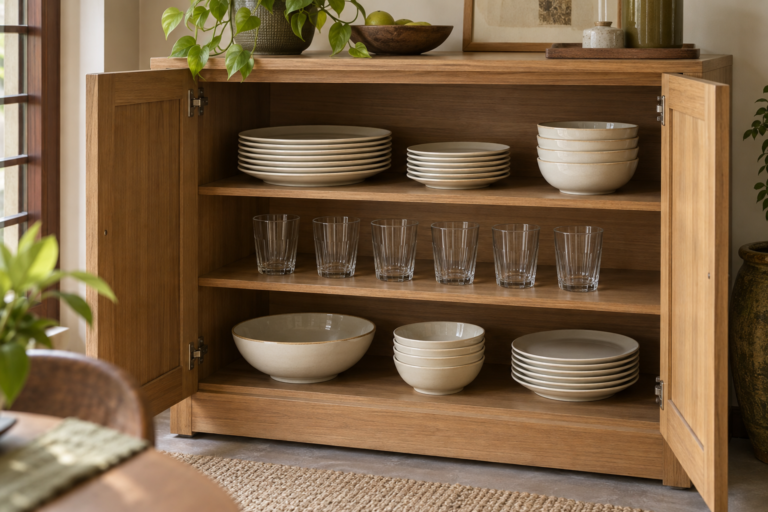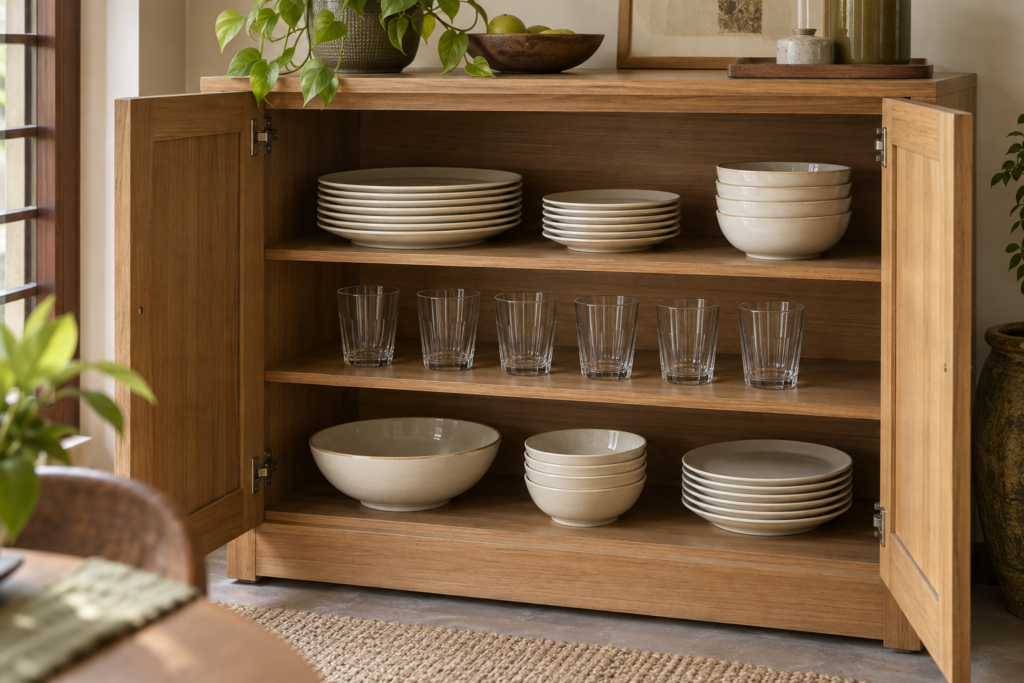
Store dinnerware in small, accessible groups instead of one tall stack. Start with the pieces used daily and give occasional serving items a separate position. The useful test is whether you can remove one plate without rearranging the cupboard.
Measure the largest piece first
Compare plate diameter with usable shelf depth and door clearance. Include any lip on the cupboard and allow space for your hand. A plate that fits flat may still be awkward if the opening is narrow or hinges obstruct the edge.
Check the full stack height, not just one plate. Consider the filled shelf load and the furniture's instructions. Do not add a riser simply because there is unused height without checking the shelf and organiser limits.
Divide by use
Keep daily dinner plates together, small plates together and bowls in a manageable group. Place the most-used pieces where you can retrieve them comfortably. If guest settings make the regular stack unwieldy, store them separately.
A dinner set's piece count can hide how much room it needs. For example, the researched Cello format includes three groups of six items. Plan a location for all three groups rather than finding space for the dinner plates alone.
Consider a riser only for a clear task
- Check its footprint and leg positions against the dishes below.
- Leave room to remove the lower items without scraping the riser.
- Confirm the permitted load and installation, if any.
- Avoid creating a second crowded layer that is difficult to clean.
An extra level is useful when it separates manageable groups, not when it encourages filling every available gap. If organiser specifications are unclear, do not assume it can carry a stack of dinnerware.
Test during a normal meal
Set the table, return the clean pieces and note where you have to move unrelated items. Adjust that position first. A small change in grouping may remove the need for a purchase.
Keep the cupboard easy to maintain by leaving enough room to wipe the shelf and inspect the arrangement. Storage that works only when everything is perfectly stacked is unlikely to stay convenient.
A useful question before you decide
Should I buy a shelf riser before rearranging the cupboard?
First separate the pieces by use and trial smaller stacks. A riser is useful only if both levels leave room to remove the dishes, and its dimensions and load instructions suit the intended arrangement.
Continue planning
Editorial note: this guide distinguishes general planning advice from recorded product-listing information. No hands-on product testing is claimed. Read our editorial policy for our approach.