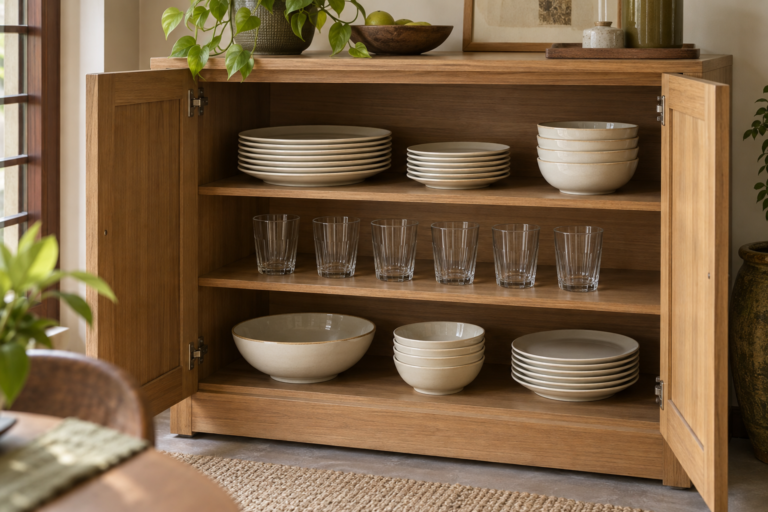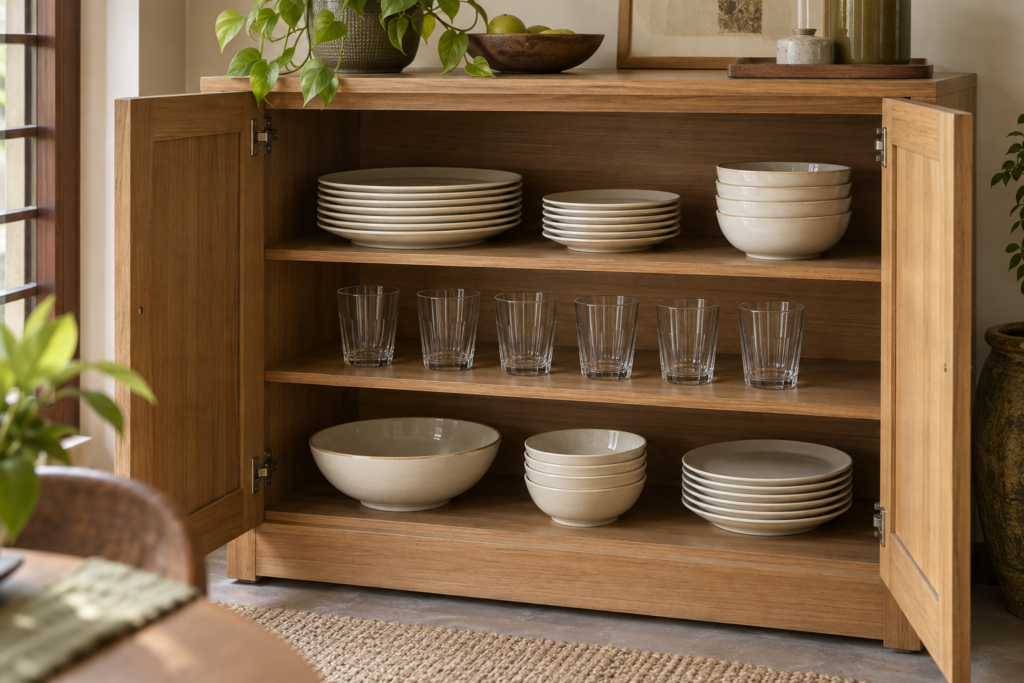
Choose tableware by the intended use, exact care instructions and comfortable handling. “Opalware”, “ceramic” and “melamine” describe broad material categories; they do not tell you that every product in a category can be used in the same appliance or washed the same way.
Begin with the meal and the routine
List whether you need everyday plates, serving bowls or mugs. Then note how you wash, store and use them. A product that suits serving may not be intended for heating, while a mug and a dinner plate have different handling needs even if both are ceramic.
Check the dimensions and filled weight where relevant. Compare a stack in your cupboard and an individual piece at the table. A material preference is less useful if the pieces do not fit your shelf or portion size.
Compare products rather than slogans
- Opalware example: our Cello dinner-set record identifies opal glass; verify its exact care guidance and pack contents.
- Ceramic example: our ExclusiveLane mug record identifies ceramic; confirm the instructions for that decorated mug.
- Melamine candidate: the serving set in the initial shortlist needs further detail-page checks before a product recommendation.
Do not infer microwave, oven or dishwasher compatibility from a category label. Use clear instructions for the exact piece and, where provided, its markings. Decorative finishes and separate components can affect the permitted use.
Avoid universal durability claims
This guide does not contain drop tests, thermal tests or long-term comparisons. It cannot establish that one material is universally unbreakable, safer or longer-lasting. Consider how the item will be handled and what the manufacturer states without turning those statements into tested results.
A useful shortlist method
Choose two or three specific products that meet your meal and storage requirements. Compare their documented dimensions, contents and care. Remove any option whose intended use is unclear for your routine.
If your current tableware already performs the task, replacing it solely to switch material may not improve anything. Fill the actual gap—such as bowls of a useful size—rather than buying a complete collection around a material trend.
Product formats to compare
These examples come from listing research recorded on 16 September 2026, not hands-on testing. Check the selected variant and current instructions before buying.
A useful question before you decide
Can material alone tell me whether a plate is microwave-safe?
No. Use the instructions and markings for the exact decorated product. A broad material category does not establish appliance compatibility for every finish or component.
Continue planning
Editorial note: this guide distinguishes general planning advice from recorded product-listing information. No hands-on product testing is claimed. Read our editorial policy for our approach.